
Most multi-day events run essentially the same operational plan each day. Same layout, same signage, same session structure, same catering pattern. The plan was set months in advance, and once the event opens, the focus shifts to delivering it.
Day one is more than delivery, though. It’s a live read of how this specific audience uses this specific venue, and it’s the most accurate data you’ll get about either. Most teams file that read away for next year’s debrief, when the more valuable move is to act on it before day two opens.
Why Day One Is Your Best Data
Everything you planned the event on was an estimate. Registration numbers, last year’s patterns, your read of the agenda. Day one replaces all of it with what actually happened.
It shows you this crowd, in this room, moving through this programme, rather than a forecast or a comparable event from twelve months ago. And unlike a post-event report, it arrives while there’s still something you can do about it. A dead zone spotted on day one is a dead zone you can fix for day two. The same finding in a post-event report is a note for a planning cycle nobody will remember by then.
For a two- or three-day event, that evening is the single most useful planning window you get, worth more than the on-the-fly fixes you make during the day itself.
What Day One Reveals, and the Day-Two Fix
The value is in pairing each observation with an adjustment you can actually make overnight.
| What day one shows | The day-two adjustment |
| A zone that stayed consistently empty | Move signage, relocate a feature or refreshment point to pull traffic through it |
| A session massively over or under-subscribed | Swap rooms, add a repeat slot, or resize the space for day two |
| A bottleneck at a specific choke point | Reroute flow, add staff, or stagger a start time to break the crush |
| Sponsor zones the flow routed around | Reposition signage or a scheduled moment to bring delegates past them |
| Catering demand peaking off your planned timing | Shift service times to match when people actually broke |
| A predictable mid-afternoon energy dip | Schedule refreshments or a sponsor activation into that window, and put staff on the floor |
None of these need a fresh event plan. Each is a targeted change made because the first day showed you where the original assumption was wrong.
The Overnight Turnaround
Acting on day-one data depends on having a process ready for it, rather than hoping someone spots the pattern in passing. A few things make the turnaround work:
- Nominate who reviews the data, and when. A short, deliberate review on the evening of day one, owned by one person, not squeezed into the end-of-day scramble.
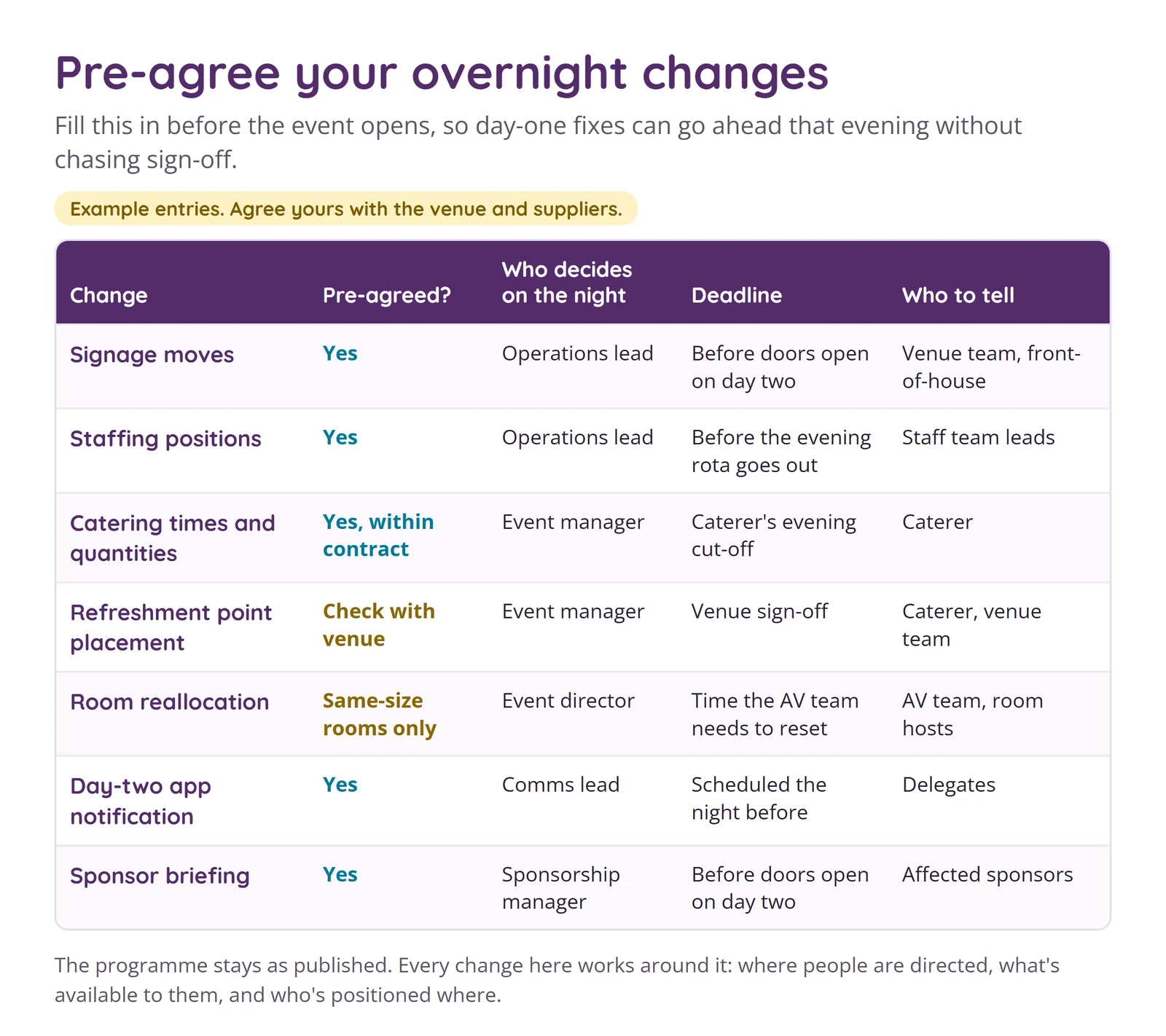
- Pre-clear the changes you’re willing to make. Agree before the event which adjustments (signage moves, staffing shifts, service-time changes, room swaps) can happen overnight without fresh sign-off. Decisions that need chasing down an approver at 9pm won’t get made.
- Communicate changes to attendees. Push a day-two update through the app so delegates arrive knowing what’s moved. A change nobody’s told about creates as much confusion as the problem it solved.
- Brief affected sponsors. If you’re repositioning traffic or signage around a sponsor zone for day two, tell them. A sponsor who sees you acting on day-one data to improve their result is a sponsor in a better renewal conversation.
What You Can and Can’t Change Between Days
Not everything is adjustable overnight, and a realistic list matters as much as an ambitious one.
Signage, staffing deployment, catering quantities and timing, minor schedule tweaks, and room reallocations are usually within reach. Hard-booked rooms, printed programmes, contracted AV setups, and anything requiring a sponsor’s own sign-off often aren’t, at least not by the next morning. Knowing the difference keeps the day-one review focused on changes you can actually deliver, rather than a wish list that stalls on the first constraint.
The practical version of this is a short, honest list of levers you know you can pull between days, agreed before the event opens.
Treat Day One as a Rehearsal With Real Stakes
Day one delivers a real event and doubles as the most accurate rehearsal you’ll ever run for the days that follow. The teams who get the most from a multi-day event are the ones who read the first day closely and adjust, rather than running the same plan on repeat and saving every lesson for a debrief.
The data is there by the end of the first afternoon. The only question is whether anyone acts on it before the doors open again.
VenuIQ gives the team a full read of day one as it happens: zone-level dwell and occupancy, session attendance, movement patterns, and sponsor-area traffic. With that in hand on the first evening, the day-two adjustments become a short, evidence-based list rather than a guess.
If you’d like to see how that works in practice, book a demo and we can walk you through it.
You must be logged in to post a comment.