
Passive Attendee Tracking vs Badge Scanning vs RFID
Every event organiser tracking attendees is choosing between three methods, whether they’ve framed it that way or not. Badge scanning, RFID, and passive Bluetooth tracking all tell you something about who came to your event. They tell you very different things, and the differences matter most at exactly the moment a sponsor asks what they got for their money.
Here’s how each one works, what it can and can’t measure, and how to pick.
Badge scanning
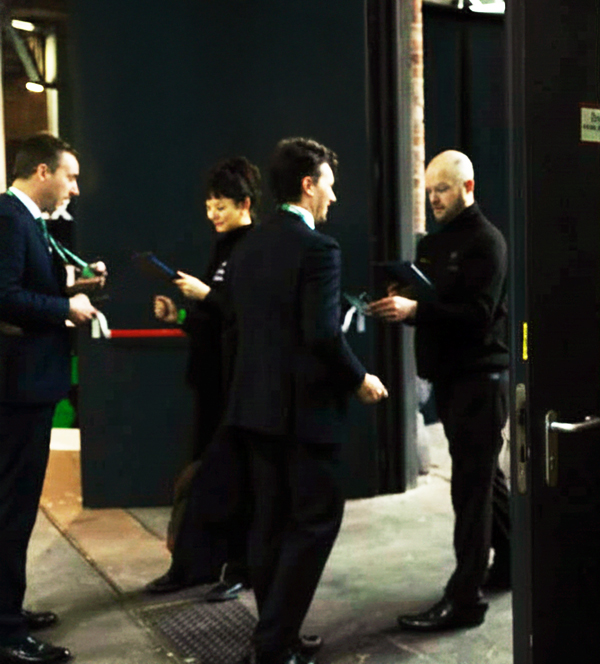
A member of staff, or the attendee themselves, scans a QR code or barcode on a badge at a fixed point – usually the entrance, sometimes a session room door or an exhibitor’s stand.
What it measures well: check-in. If you need a headcount at the door and a list of who arrived, scanning does the job cheaply and reliably. Exhibitors scanning badges for lead capture get a clean record of who they spoke to and chose to scan.
Where it falls short: it only captures the moments someone deliberately scans. Nothing happens between scan points. You know a delegate entered the venue at 09:12; you don’t know whether they spent the day in the expo hall or in the coffee queue. It also creates queues, because every scan is a stop, and it depends on people remembering – session attendance data is only as good as the compliance of tired delegates walking past a scanner.
Best for: smaller events, tight budgets, or when a verified headcount and lead capture is genuinely all you need.
RFID
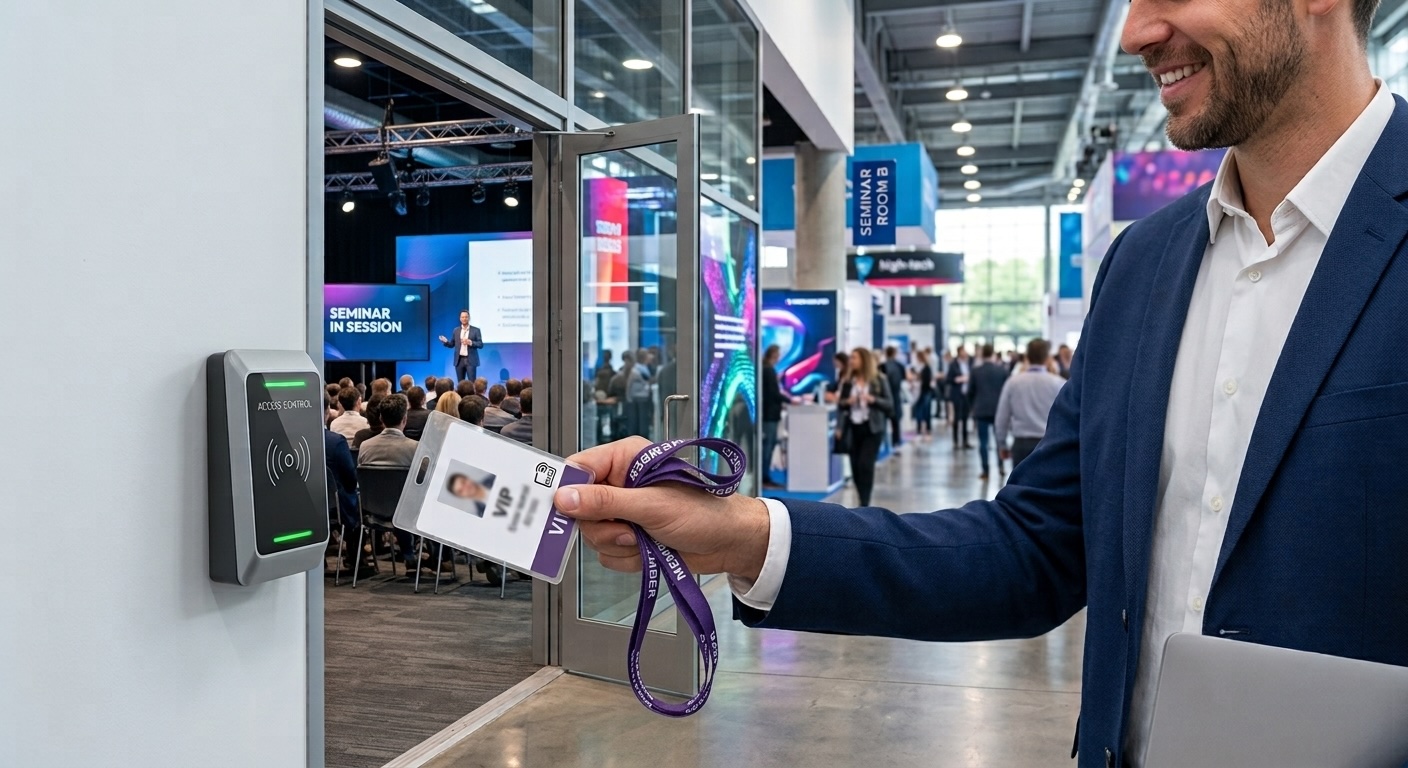
Attendees carry an RFID chip in a badge or wristband and tap it against readers placed around the venue. Depending on the system, readers can be at entry points, session doors, exhibitor stands or activation zones.
What it measures well: discrete, deliberate interactions. RFID is excellent at access control – it can enforce who gets into a VIP area or a paid session. It handles cashless payment. Where an exhibitor wants an attendee to opt in to sharing details, a tap is a clear, consented action.
Where it falls short: it requires the tap. Every data point depends on an attendee choosing to do something, which means your data reflects engagement willingness rather than actual behaviour. Attendees who don’t tap are invisible, even if they stood at a stand for ten minutes. Readers are expensive to deploy densely, so most events end up with sparse coverage and a partial picture built from a handful of touchpoints.
Best for: access control, cashless payment, and gamified activations where the tap itself is the point.
App-based tracking
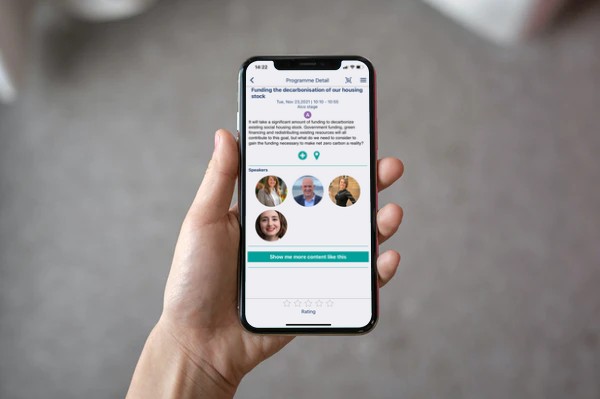
Attendees download the event app, grant it location and Bluetooth permissions, and the phone itself becomes the tracking device — detecting nearby signals as the attendee moves around the venue.
What it measures well: it needs no hardware on the attendee, so if you’re already running an event app, the marginal cost is low. It can tie movement to in-app behaviour – what someone viewed in the agenda alongside where they went — and it gives you a channel to push notifications based on location.
Where it falls short: every data point depends on the attendee opting in and keeping the app running in the background. In our experience around 70% don’t opt in, and the ones who do have to leave the app open, with the battery drain that brings. Apple and Android have both tightened background location and data-sharing permissions over recent years, which has narrowed what’s possible rather than widened it.
The deeper problem is who you end up measuring. The attendees who download the app, grant permissions and keep it running are your most engaged delegates. Everyone else is invisible. So you’re not sampling your audience – you’re sampling the keenest slice of it, and then drawing conclusions about the whole event from it. For a sponsor report, that’s a number with a hole in the middle.
Best for: events already running an app where indicative engagement data is enough, and where nobody is going to interrogate the sample.
Passive Bluetooth tracking
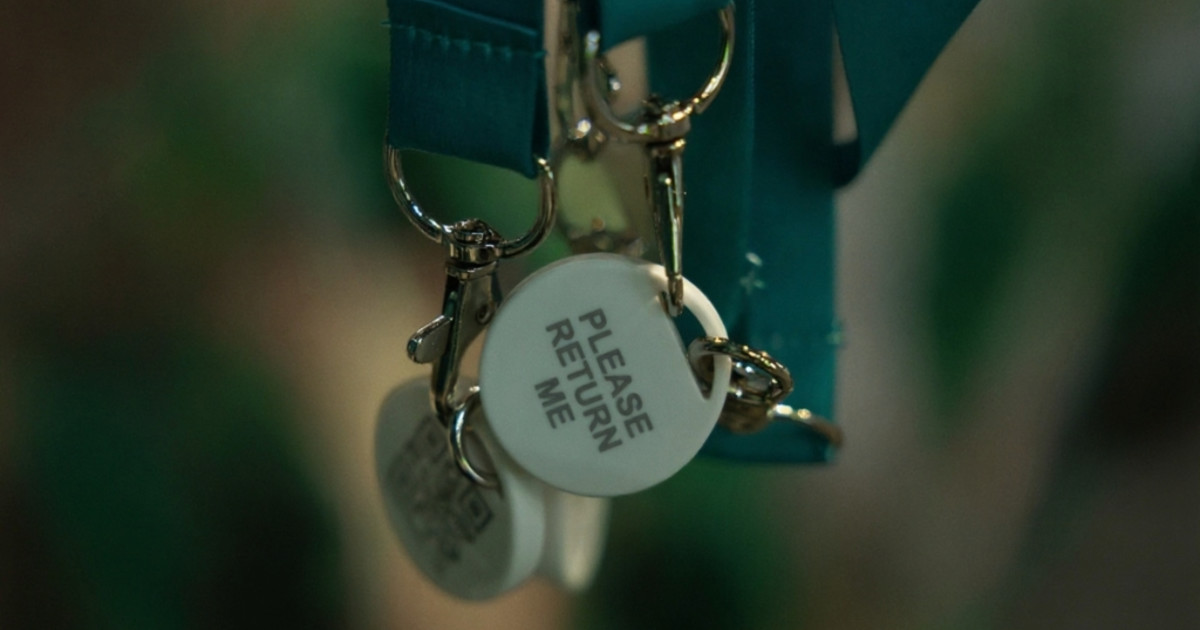
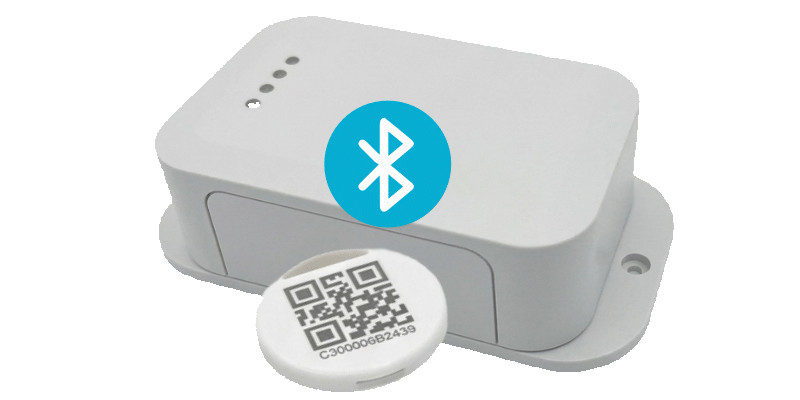
Attendees wear a small Bluetooth beacon on their lanyard. It signals continuously to gateways placed around the venue, which record where the delegate is and how long they stay. The attendee does nothing at all – no app to download, nothing to scan, nothing to tap.
What it measures well: behaviour. Because there’s no action required, the data reflects what actually happened rather than who remembered to comply. You get dwell time, not just presence. You get movement patterns across the whole venue, not readings at a few fixed points. You see which stands someone lingered at, which sessions they stayed in and which they walked out of at the ten-minute mark, and where congestion built up.
Crucially, because the beacon is tied to the delegate’s registration record, every movement is attributable to a named person and their profile – job title, seniority, sector. That’s the difference between “3,000 people passed your stand” and “142 delegates visited, averaging 3 minutes, and 38% were senior buyers in your sector.”
Where it falls short: it needs beacons and gateways deployed at the venue, so there’s a hardware footprint, and it isn’t the cheapest option for a 50-person meeting where a headcount would do. It also isn’t an access control system – it measures behaviour rather than enforcing permissions.
Best for: conferences and exhibitions where you need to prove ROI to sponsors and exhibitors, understand how attendees really behaved, and plan next year on evidence.

The three methods side by side
| Badge scanning | RFID | App-based | Passive Bluetooth | |
|---|---|---|---|---|
| Attendee action required | Scan at each point | Tap at each reader | Download, opt in, keep app running | None |
| What it captures | Check-ins | Deliberate taps | Movement of opted-in users | Continuous movement |
| Dwell time | No | Only between taps | For opted-in users only | Yes |
| Session drop-off | No | No | Partial | Yes |
| Full venue picture | No | Partial | No — opted-in users only | Yes |
| Attributable to named delegate | Yes, at scan points | Yes, at readers | Yes, if opted in | Yes, everywhere |
| Measures your whole audience | Arrivals only | Tappers only | Opted-in users only | Yes |
| Creates queues | Yes | Some | No | No |
| Access control | Limited | Yes | No | No |
| Data completeness depends on compliance | Yes | Yes | Yes | No |
How to choose
Start from the question you need to answer.
If the question is “how many people came?”, badge scanning answers it, and anything more is over-engineering.
If the question is “who is allowed in here?” or “how do we take payment without cash?”, that’s RFID’s job.
If the question is “roughly what did our most engaged attendees do?”, app-based tracking will tell you, as long as everyone reading the report understands that this is the group it describes.
If the question is “what did people actually do, and what do I tell my sponsors?”, only passive tracking answers it. The other methods capture moments of compliance, or the behaviour of the minority who opted in. Passive tracking captures behaviour across your whole audience, which is what a sponsor’s finance team will ask about when they query next year’s budget.
Most large events end up using more than one. Scanning for registration, passive tracking for behaviour and ROI, is a common and sensible pairing.
Frequently asked questions
Badge scanning records a check-in at a fixed point when someone deliberately scans. Passive attendee tracking uses a Bluetooth beacon that captures movement and dwell time continuously, with no action from the attendee. Scanning tells you someone arrived; passive tracking tells you what they did.
They do different jobs. RFID is better for access control and cashless payment, because a tap is a deliberate, enforceable action. Bluetooth is better for measuring behaviour, because it captures continuous movement and dwell time without requiring attendees to do anything.
It can, but only for attendees who download the app, grant location permissions and keep it running in the background. Around 70% don’t opt in, and phone operating systems have tightened background location permissions over recent years. The data you get describes your most engaged attendees rather than your whole audience
Passive Bluetooth beacons, because they don’t depend on attendees doing anything. Every other method – scanning, tapping, app opt-in – only captures the people who complied, so the data has gaps you can’t see or account for.
No. The beacon is worn on the lanyard and works on its own. There’s nothing to download, and attendees don’t have to opt in through a phone.
Only passive Bluetooth tracking measures true dwell time. Badge scanning captures single moments at fixed points, and RFID measures the gap between taps, which only counts attendees who chose to tap.
Yes, and many large events do. Badge scanning for registration and verified check-in, passive tracking for behavioural and ROI data, is a common combination.
Get more information on attendance tracking
Call +44 121 796 5800 to book your demo and see what’s possible for your next event.