
Every year, the events industry publishes a new list of event technology trends. Many focus on headline topics like AI, immersive environments, or the next generation of hybrid events.
The more meaningful changes tend to be quieter. They appear in how events are measured, how organisers use data, and how technology supports the operational side of running large gatherings.
As we move through 2026, a few trends are becoming increasingly clear. Together, they point toward a future where events are more measurable, more responsive, and more closely connected to broader business strategy.
Event Tech Trends 2026
#1 Physical Events Are Becoming Measurable Environments 📍
Virtual events introduced organisers to a level of behavioural insight that physical events rarely provided. Platforms could show exactly who attended a session, how long they stayed, and what content attracted attention.
When in-person events returned, that visibility largely disappeared. Many events still rely on estimates, badge scans, or manual counts to understand what happened onsite.
New event tracking technologies are beginning to close that gap.
Organisers can now measure behaviours that were previously difficult to capture, such as:
- session attendance without manual badge scanning
- time spent in networking or exhibitor areas
- movement patterns across the venue
- interaction patterns between attendees, content, and sponsors
This level of visibility allows physical events to be analysed with a precision that was previously associated with digital platforms.
#2 Artificial Intelligence Is Moving Into Event Operations 🤖
Much of the early conversation around AI in events focused on marketing tools or automated content creation.
The more significant shift is operational.
AI is increasingly used to analyse engagement patterns and help organisers make decisions during the event itself. Examples include:
- identifying sessions that may become overcrowded
- detecting drops in engagement during specific time periods
- suggesting relevant networking introductions
- highlighting behavioural trends across attendee segments
Instead of acting as a novelty feature, AI is becoming a layer that helps organisers interpret complex event data and respond faster.
That said, the quality of AI-driven insight depends on the quality and structure of the data it is trained on. Organisers who invest in consistent, well-organised data collection are likely to see more meaningful results than those who expect immediate personalised output without that foundation in place.
#3 Smaller, Curated Event Formats Are Expanding 🎯
Large flagship conferences remain central to many event strategies. At the same time, organisations are investing more heavily in smaller, targeted formats.
These include:
- regional editions of major events
- executive forums and invitation-only gatherings
- niche industry conferences
- curated networking programmes
Smaller niche events allow for deeper interaction between attendees, speakers, and sponsors. They also give organisers more control over the audience composition and the overall experience.
Technology plays an increasing role in helping organisers understand how these curated audiences interact and how engagement evolves across events.
For sponsors, this creates a more layered approach to investment. A presence built across regional micro-events, a flagship conference, and related publications or webinars gives sponsors more consistent touchpoints with a target audience throughout the year. That kind of multi-format investment is increasingly where more considered sponsor strategies are heading.
#4 Event Data Is Becoming Business Intelligence 📊
For many organisations, event data no longer sits only in post-event reports.
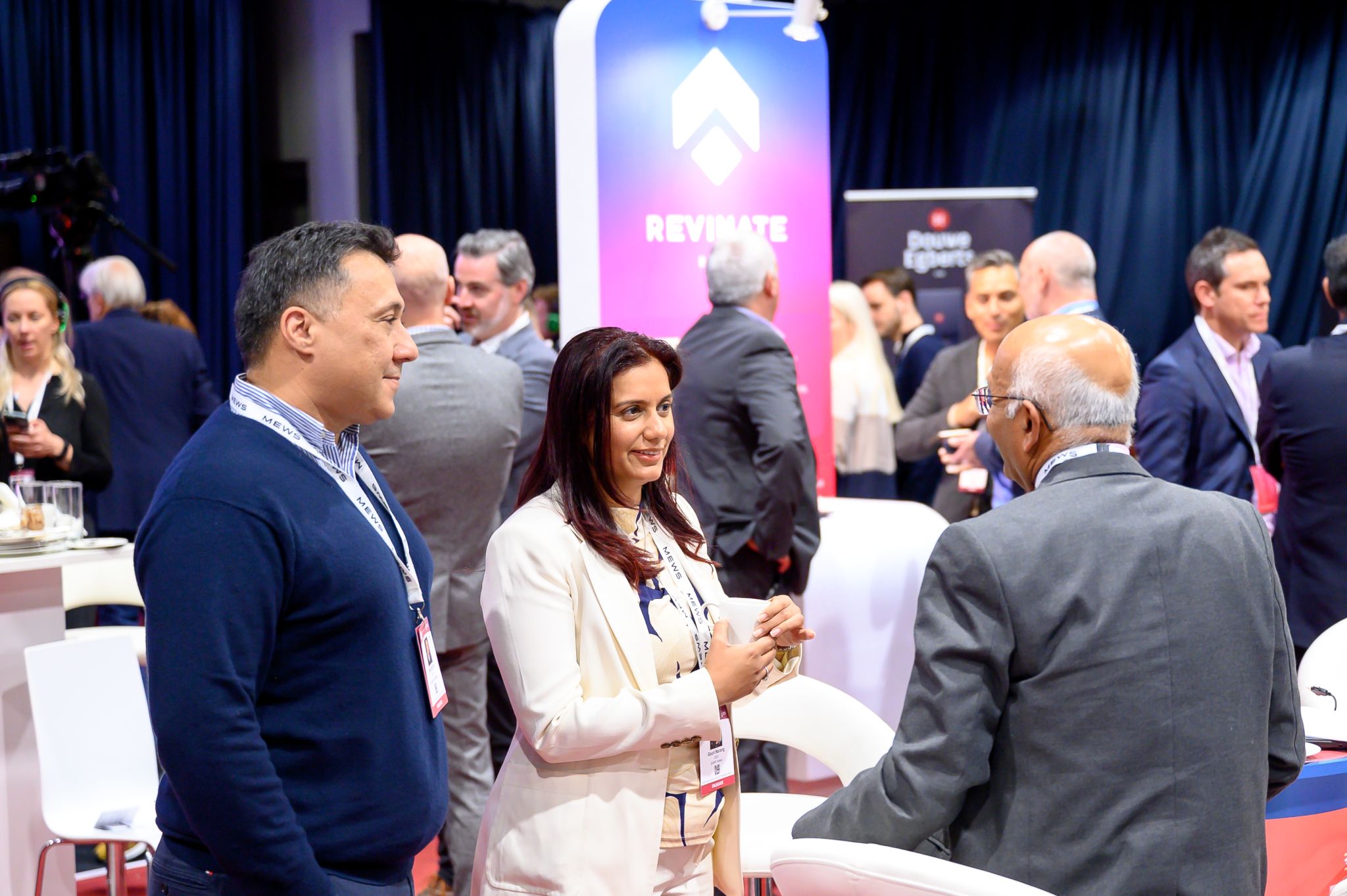
Attendance patterns, engagement behaviour, and sponsor interaction data are increasingly feeding into wider strategic decisions. In many cases, event data is becoming part of the organisation’s broader business intelligence, alongside sales, marketing, and customer insights.
This shift allows event teams to answer questions such as:
- which industries engage most with specific content
- which regions generate the strongest participation
- how sponsor interaction patterns influence partnership strategy
- where future events or regional editions should expand
When event data becomes part of business intelligence, reporting moves beyond summaries and starts informing investment, expansion, and sponsorship decisions across the entire event portfolio. In that sense, the event organisation starts to function as a data engine for the wider business, generating insight that shapes decisions well beyond the events themselves.
#5 Personalisation Is Becoming Behaviour-Driven 🧠
Personalisation has long been a goal of event technology. In practice, it often meant customised agendas or targeted notifications in the event app.
The next phase is based on behaviour rather than preference settings.
As organisers gain deeper insight into how attendees interact with content and networking spaces, they can design experiences that respond to real participation patterns.
This can include:
- networking suggestions based on shared session attendance
- highlighting relevant exhibitors based on engagement behaviour
- curating experiences for VIP attendees
- surfacing content that aligns with observed interests
Instead of relying only on what attendees say they want, organisers can increasingly design experiences around how people actually participate.
#6 Event Technology Is Becoming More Integrated 🔗
For many years, event technology platforms positioned themselves as “all-in-one” solutions.
That approach is becoming less common. Organisers are increasingly building technology stacks of specialised tools that integrate with one another rather than relying on a single system to handle everything.
These stacks often combine tools for areas such as:
- registration and ticketing
- exhibitor and sponsor management
- behavioural tracking and movement analysis
- lead capture and sales integration
- networking and meeting scheduling
What matters most is how well those systems work together.
Strong integrations allow organisers to combine operational data, engagement signals, and sponsor performance metrics into a single view of event performance.
Rather than replacing existing tools, newer technologies are increasingly designed to connect with the systems that organisers already rely on.
#7 Event Performance Is Under Greater Investment Scrutiny 📈
Sponsors and investors are increasingly asking the same question: what measurable return do events deliver?
For large sponsors, significant event investments require clear evidence of impact. Footfall and anecdotal feedback are rarely enough to justify continued spend.
At the same time, many event organisations now operate under growth expectations from private investment, public ownership, or internal corporate targets.
In those environments, event performance is judged increasingly by measurable outcomes such as:
- sponsor engagement and renewal rates
- attendee interaction and session participation
- commercial growth across the event portfolio
- the success of new launches or regional expansions
That pressure is changing how event performance is measured.
Organisers are relying more heavily on data-driven approaches to understand sponsor engagement, attendee behaviour, and event growth potential. Behavioural insight helps teams identify which formats work, where new events can succeed, and how sponsor value can be demonstrated more clearly.
From Event Tech to Event Intelligence
What ties these trends together is a broader shift in how events are managed.
For a long time, organisers relied on partial visibility. Attendance counts, badge scans, and anecdotal feedback provided useful signals, but they rarely told the full story of how people actually experienced the event.
That’s starting to change.
As measurement improves and behavioural insight becomes easier to capture, events are gradually becoming environments that can be analysed and optimised with much greater clarity. Organisers can see where attention concentrates, how attendees move through the venue, and which interactions create the most value.
For teams responsible for programme design, sponsorship strategy, and overall event performance, that level of visibility changes the conversation.
If you’re exploring ways to better understand how attendees interact with your event, VenuIQ helps organisers track movement, engagement, and interactions across the venue in real time. The result is a clearer picture of what’s actually happening on the ground and stronger insight to guide future decisions.
You can book a demo with VenuIQ to see how behavioural tracking works in practice and how it can support more informed event planning.
You must be logged in to post a comment.